For the very first post on this blog, I have copied the below post from my newsgroup at
http://groups.yahoo.com/group/ArkBuilders_orgSpecial thanks to John Warner from his California-based
http://www.wholesystemsag.org for this important message of food independence delivered with a heart for sharing, based upon 50-years of hand farming experience. What a gift you have given us.
Who among us will be wise enough to listen and then also apply?
Cheers, Tate
=========================
Hello Arkbuilders,
My normal style is to not give advice. I just share my experience,
stay away from controversy and criticism and let people do as they will.
However, the urgency of our time compels me to revise my style. If
you are a beginning gardener starting up for the first time in the
2009 season, you need to experience some success on your very first
try. Just as I have heard that as a species we have just one chance
at industrial civilization [which it looks like we're blowing], as
individuals we may have but a single chance to get food gardens up and
growing.
So I will give some advice. My qualifications for doing so include a
university degree in horticulture and close to 50 years of teaching
experience in agriculture and science. As a teacher I have always
worked as a salaried professional or as a volunteer and I have never
sold my advice to individual people in the form of courses, books or
speaking engagements. The latter, of course, is no guarantee of
efficacy but it does say something of motive. I am the originator of
the Whole Systems Agriculture model and method and maintain for the
public benefit a completely non-commercial website at my own expense.
I am a hand-scale market gardener who has successfully competed with
tractor growers since 1996.
First I would like to say that if you follow the advice given in the
review of the "Easy Organic Permaculture System" posted on this site
yesterday, your failure will be nearly assured. Mandala gardens are
an idea I've tried and discarded years ago. Pure contrivance. If
vegetables were better grown in circles than in rows or beds, people
would have been doing it long ago. Vegetables cannot be grown in
competition with trees because the trees, in time, will get it all:
light, water and nutrients. I've tried that too and so have a number
of orchardists that grow and sell at our farmer's market. Fruit trees
take time to grow, lots of maintenance and yield poorly compared to
annual crops.
Chicken tractors are another folly. Having tried that also, I've
found that they need moving every day or two rather than the 2 week
intervals suggested in the review. When you move the tractor you also
have to move their water, nest box, supplemental feed, and safeguard
the hens against predators by seeing to it that none can dig their way
in. This eats up loads of time that could be better spent planting or
hauling in mulch or, if it's eggs you want cutting and gathering food
from the garden or greater community and carrying it in to feed the
hens which are kept in permanent stationary enclousures.
If the reader would like a good book on Permaculture, I can recommend
with one with enthusiasm It is Permaculture co-originator David
Holmgren's book "Permaculture: Principles and Pathways Beyond
Sustainability". This is the real stuff--scientific in every way and
based on modern systems theory which Holmgren calls the "holy grail of
Permaculture". But you will find little there on vegetable growing
because Permaculture, as the name implies, is based on permanent
plantings, permanent design and permanent infrastructure. And
interestingly one can discover by implication that Permaculture is not
just another kind organic agriculture -- in fact being "organic" has
nothing to do with Holmgren's 12 principles. The word "organic" is
not even in the index.
Permaculture, as it is popularly practiced is based on people selling
each other pricey courses [which, by the way, requires an ever
increasing number of paying converts entering at the bottom of the
pyramid]and renting rooms to fellow travelers. All of which reminds me
of living in an economy based on selling each other houses and writing
each other loans.] In popular Permacullture much is made of lifestyle
and expectations of ecomagic and the blessings of divas. This may be
nice but, of itself, puts little on the table.
Many beginners hold that organic practice is more productive than the
more modern practice which uses manufactured fertilizer. If this were
true, how might we explain the huge increase in population since
manufactured nitrogen fertilizers first became available a hundred
years ago? Vegetables require very high levels of soil fertility.
During the centuries before the development of even what we now call
"heirloom" varieties, it was always available and used. Now there are
many more people now and many fewer domestic animals so what are we
going to do? Manufactured nitrogen fertilizer is the answer, while it
lasts, so stock up now. It keeps well and will be your best friend in
your first year of gardening. Along with this you will also need
copious quantities of organic matter which will supply soil nutrients
other than nitrogen and give life to the soil. Best sources of
organic matter include leaves and grass clippings. In urban settings
they are plentiful, free and easy to get. Just get out in front of
the trash truck on pickup day and empty the green barrels into your
pushcart. Push home and spread as mulch.
It's been said that "you get what you pay for" and we've also heard
that the "best things in life are free" Go for the latter. An axiom
of mine is that "figuring what to buy is as simple as ABC, Always Buy
the Cheapest". Start with a shovel, a hose and a wheelbarrow. The
same is true for information. In every state and nation that I know
of there are university or government departments of agriculture that
distribute free information, have demonstration gardens you can visit
and are helpful in other ways. Information on the internet abounds
with web pages and forums. Excellent books have been out there for
years such as, in the western US, the Sunset Western Garden book. I
invite you to visit the Whole Systems website at
http://www.wholesystemsag.org but it is not designed to use without
other basic reference material.
I would avoid costly courses, seminars, workshops and publications.
Books and materials oriented to "organic" growing can be useful but
remember that organic gardening is much more a religion than a science
in that it relies on authority [Sir Albert, Lady Eve and J I Rodale
and now the government itself in the form of the USDA Organic Code]
just as religion relies on scripture. And like religion, organic
agriculture concerns itself greatly with good and evil. And if there
is ever a doubt on what's good and what's evil, just consult the
govenment [soon to be global] Code for a listing of the "good" organic
inputs you can use in your garden and the "evil" manufactured inputs
that must be shunned. Rely on more objectively oriented information
that is based on EVIDENCE, as all real science is.
If you feel this is worthy, or even interesting, please send it around
the net. I realize the material here is controversial so feel to
criticize. I'll apologize in advance for not being able to reply as my
time is becoming more and more limited and I am always glad to give my
critics the last word.
Good wishes and good growing be this your first of fiftieth year of
gardening.

John Warner near Fresno, California
http://www.wholesystemsag.org
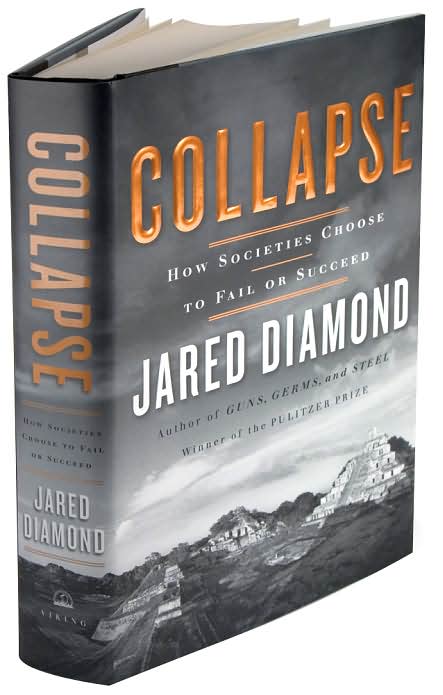 The crash -


 Posts
Posts

